
Teaching Art History for Homeschool: A Parent’s Guide

If art history feels like the one subject you’re not qualified to teach, you’re in very good company. Most homeschool parents love the idea of it and quietly skip it anyway, because somewhere along the way, we all picked up the notion that talking about art requires a degree, a museum membership, and the right vocabulary. But here’s the good news: It doesn’t require any of those things. Teaching art history at home really only requires a curious child willing to learn and a parent willing to teach (and learn alongside them).
It also helps to hear that from someone who has actually done it thousands of times over. I’m Laurie White, a mom, a wife, an artist, and a former classroom teacher with a degree in early childhood and elementary education and more than 30 years of teaching behind me. I’ve developed an art homeschool curriculum called Great Artist Program (GAP) that gives families real art education at home, not busywork, and art history sits right at the center of it. In this blog, I draw on my experience as a teacher and homeschool art curriculum creator to help you, as a parent, teach art history at home.
Why Teach Art History in Homeschool Art Curriculum? 6 Benefits for Kids & Teens
There’s a common misconception about art history: that it’s boring and unnecessary in an educational setting. I’m here to prove that thought process wrong. Art history is actually the part that makes everything else click into place. A drawing lesson on its own teaches a technique. Art history teaches your child why that technique exists, who invented it, what problem they were trying to solve, and what it felt like to be them. And then, when your child tries it themselves, and it works, something wonderful happens—they realize they can be a great artist too, just like the ones from the past.
An art history curriculum for homeschoolers offers your student far more than a list of names and dates. Along the way, they’ll build:
- Real confidence
- Critical thinking skills
- A working art vocabulary
- Cultural and historical literacy
- Cross-curricular connections
- Patience and resilience
Art history is an essential part of an art homeschool curriculum, so it’s important to learn how to teach it effectively.
How to Teach Homeschool Art History Curriculum: Tips & Tricks
You don’t need a semester plan or a syllabus. What helps far more is a handful of habits you can return to again and again. Here are 4 that make the biggest difference:
1. Find a homeschool art curriculum that fits the National Visual Arts Standards
Did you know there’s an established national framework, the National Visual Arts Standards, that defines what strong art education looks like? And choosing a curriculum built around it means you’re not guessing at whether you’re covering enough.
FAQ: What are the National Visual Arts Standards?
The National Visual Arts Standards were developed by visual arts educators through the National Art Education Association and released in their current form in 2014. Although voluntary at the national level, many states either adopt them outright or use them to shape their own state standards. To put it simply, these standards describe what students should know and be able to do in art at each grade level.
The National Visual Arts Standards can be really helpful for homeschool families due to their practicality. The standards are built around a handful of action words that show up at every grade level (and should be woven into your art history homeschool curriculum and teaching material):
- Students should create original work.
- They should respond to the art they encounter and analyze what they’re seeing.
- They should evaluate their own work and others’ work thoughtfully and kindly.
- They should connect art to history, to culture, and to their own lives.
- And they should collaborate with others through the creative process.
Once you know what’s involved in the National Visual Arts Standards, it’s easy to incorporate them into teaching material or invest in a curriculum that aligns with them. For instance, have your child evaluate famous artworks from the past and analyze what they see. Or have them create their own artwork based on a famous artist’s work from hundreds of years ago. There are so many ways to incorporate the standards into an art homeschool curriculum.
If you’ve decided to purchase an art homeschool curriculum, find one that integrates the standards naturally. One example is the Great Artist Program. With online art curricula available for kindergarteners, elementary, middle school, and high school students, these programs are built around the National Visual Arts Standards, teaching each grade level what they should be learning at age-appropriate times. The best part is that the curriculum is easy to follow, available 100% online, and is actually engaging and exciting for students.
2. Learn from a diverse range of artists from the past
When teaching your kids art history, it’s tempting to stay in your comfort zone, which, for most of us, means the same handful of Impressionists. But one of the greatest gifts an art history homeschool curriculum can give your child is range.
Teaching about art from different centuries, countries, movements, and artists whose lives look nothing alike opens young artists’ minds to the possibilities of how art can change the world—and how they can be part of that change. It shows them that art belongs to everyone, including them. From the Renaissance masters to a Japanese Ukiyo-e printmaker, the world is full of possibilities, and you get to introduce that to your child.
Whatever art homeschool curriculum you choose, ensure it studies artists not just from today or from the same culture and upbringing, but also spans centuries of art history and a range of diverse artists. This is one of the things GAP does especially well. Our art homeschool curriculum spans the Renaissance movement of the 1400s through the feminist art movement of the 1970s and right up to the present day.
- Our elementary art homeschool curriculum teaches students how to recreate 36 masterpieces by master artists spanning centuries, from Mary Cassatt’s “The Loge” to Henri Matisse’s “Beasts of the Sea,” covering cubism, surrealism, pop art, and much more for a diverse range of topics.
- The curriculum for middle and high school students includes an in-depth study of 6 master artists spanning centuries, with artist fact sheets, 5-page lessons, and teaching resources to help students engage with each artist’s story.
3. Connect art history homeschool curriculum with what you’re already teaching
Art history is one of the most naturally cross-curricular subjects you’ll ever teach, which is very good news for a full week. If you’re studying the Renaissance in history, you have an art unit sitting right there waiting for you. If you’re covering ancient civilizations, world geography, or a particular decade of American history, there’s art from that exact moment in time that your child can look at and then try for themselves.
Literature is an especially rich pairing. After finishing a good book, invite your child to illustrate a favorite scene, design a new cover, or draw a character as they pictured it. It deepens comprehension and creative thinking at the same time, and it makes the reading stick. If you’d rather have that work planned out for you, GAP’s Art + Literature lessons pair classic stories with guided art projects, teaching tips for parents, and book suggestions, so you can open the page and teach.
The point is that art history doesn’t need its own separate slot fighting for space on your schedule. Tuck it alongside what you’re already doing, and it will make that subject better, too.
4. Analyze and evaluate art pieces together
This last one costs nothing and might be the most valuable habit on the list. Put a piece of art up and let your child sit with it quietly for a full minute, which will feel much longer than it is. Then start asking questions like:
- What do you notice first?
- What do you think is happening in this picture?
- How does it make you feel, and what did the artist do to make you feel that way?
- What do you think was going through the artist’s head when creating this?
- What would you add or take away from this art piece?
There are no wrong answers, and that freedom is exactly the point. Children are far better at this than we expect—we just have to allow them to stay curious.
Then bring the same curiosity to your child’s own work. When their piece is finished, ask what they’re proudest of and what they’d like to try differently next time. When you tell them what you see, be specific. Rather than “that’s beautiful,” try “look at the way you got that shadow to curve around the shape.” If you have other homeschoolers nearby, have them come over to show off their own artwork and lead a discussion around each piece. Curiosity is the goal! That kind of collaboration is vital to teaching art history at home, and it’s usually the part kids remember most.
Great Artist Program: The Art Homeschool Curriculum Spanning from the 1500s to Today
If you’d like all of this planned, sequenced, and ready to teach, that’s exactly what the Great Artist Program was built to be. It isn’t a simple arts-and-crafts project. It’s real art education that follows the National Visual Art Standards and teaches students to create original masterpieces, so they can become the great artists they’ve always been.
- Each package in the elementary curriculum includes 7 hours of content covering art techniques, art history, art appreciation, critique, and essential art vocabulary. Students get 12 online art classes built around 12 masterpieces they’ll recreate themselves, with four video segments in every class: one about the artist, one about the art, and follow-along drawing and coloring guides.
- The kindergarten package, Animals Around the World, helps the youngest artists learn line, shape, color, composition, symmetry, texture, and color blending while traveling the globe.
- The middle and high school package spans an entire school year. It includes a 75-page workbook, engaging videos, technique practice, writing prompts, sketchbook guides, and lessons on 6 master artists, each with 5-page lessons, artist fact sheets, teaching resources, and more. Each package aligns with the national standards for history in 7th and 8th grade and 10th and 11th grade, covering World Artists and American Artists.
For parents, there’s an easy-to-follow teaching guide with tips and tricks, plus a complete supply list of things you can actually find. Everything is 100% digital and self-paced, so it works at the kitchen table, in the car, or on a travel week, and a single lesson can be done in one sitting or spread across a few days.
Because Laurie built every lesson from the National Visual Arts Standards up, you can be confident that the homeschool art curriculum covers above and beyond what’s needed for each grade level.
Your Child Is Already an Artist
Kids and teens just need someone to show them what’s possible, and that someone is you. This is what makes art history such a gift to teach: artist after artist, century after century, it quietly proves that every one of the “greats” began as a beginner who kept going. Your child gets to see that, believe it, and then pick up a pencil or paintbrush and become part of the ever-unfolding story of creativity.
So start small this week. Pull up one painting, ask one honest question, and see where the conversation takes you. When you’re ready for more structure, try a free lesson with your child and watch what they do with it, or browse GAP’s free art resources and start today.
Teaching Art History for Homeschool: A Parent’s...

If art history feels like the one subject you’re not qualified to teach, you’re in very good company. Most homeschool....
7 Kids’ Birthday Art Activities to Make...
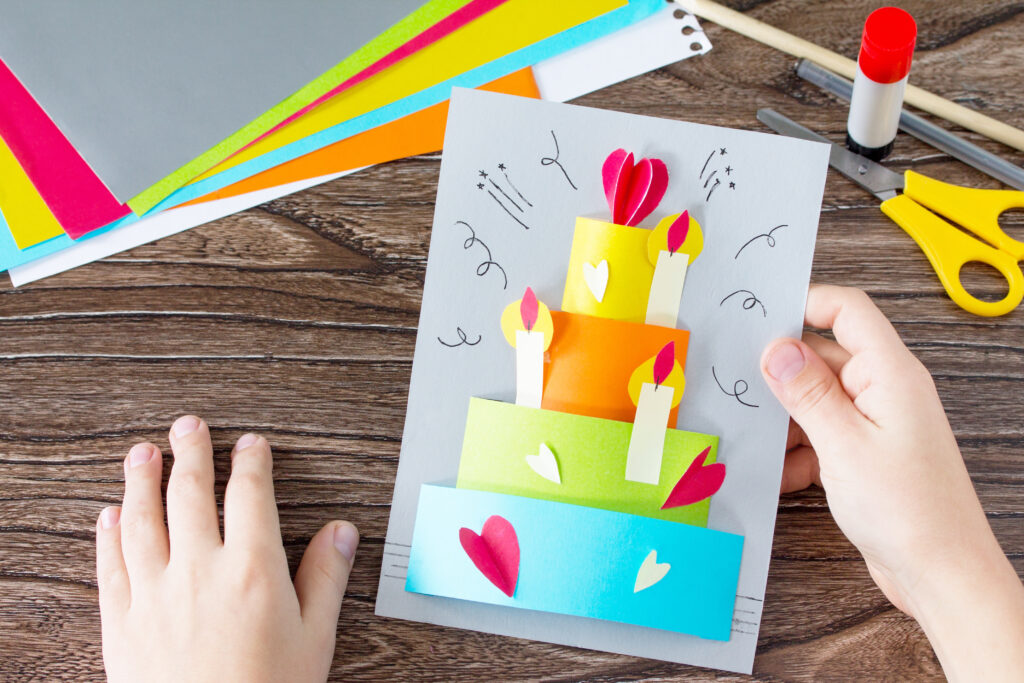
Art-themed birthday parties have become a favorite for good reason. They give every child something personal to work on, a....
Teaching a Homeschool Art Curriculum: The Starter...